What Jeremy Maher Does as COO of Phoenix Home Remodeling: Roles, Responsibilities, Results
Jeremy Maher, Co-Founder & COO of Phoenix Home Remodeling in Chandler, Arizona. If you have ever watched a remodeling project drift off track because decisions were delayed, scope was fuzzy, or expectations were unclear, you already understand why Jeremy Maher’s day-to-day responsibilities matter. As Co-Founder & COO, Jeremy Maher is not just overseeing work. He is shaping how Phoenix homeowners move from ideas to a built outcome with fewer surprises and more control.
In Phoenix, interior remodels are rarely “easy” in the way marketing promises. The home has to be lived in, schedules are tight, and choices like tile, lighting, layout tweaks, and finishes can cascade into cost and timing. Jeremy Maher approaches the work from the planning side first, because that is where most problems begin, even when they look like construction issues on the surface.
Why the COO role is really about planning, not just operations
How operations connect to homeowner experience
A construction project can be executed well and still feel like a mess to the homeowner. That is where Jeremy Maher’s COO responsibilities connect the operational side of Phoenix Home Remodeling to the lived experience inside the home. As COO, Jeremy Maher leads operations, process design, and the homeowner experience. That combination is important because it keeps process decisions grounded in what homeowners actually need at each step.
For example, when a homeowner is choosing between options, the project can stall if the team does not make it clear what is needed now versus later. If communication is not consistent, progress can feel unpredictable even when crews are working. If updates do not land in a predictable rhythm, homeowners fill the gap with worry. Jeremy Maher’s operational focus is designed to reduce that “silent uncertainty.”
The “planning problems” philosophy in practice
Jeremy Maher’s view is direct: most remodel problems are planning problems, not construction problems. Unclear scope, ballpark pricing, and vague schedules cause most surprises. That philosophy changes how Phoenix Home Remodeling frames planning conversations.
Instead of treating scope like a loose suggestion, the team emphasizes defining the work clearly early. Instead of leaning on uncertain estimates, Phoenix Home Remodeling builds a fixed price from the finished design and selections. Instead of leaving timing vague, the project process is set up so progress can be tracked, including regular updates through a homeowner portal.
When those planning elements are handled early, construction problems often shrink in both frequency and impact. They still happen sometimes, but they are less likely to snowball into major disputes or major redesigns.
The process Phoenix Home Remodeling uses, and Jeremy Maher’s part in it
Design and 3D visualization before anything is built
Phoenix Home Remodeling uses a planning-first design-build process that completes feasibility, material selections, and 3D design before construction begins. That sequence is not just a slogan. It is the backbone of how decisions become buildable choices.
Jeremy Maher’s operations and process design responsibilities connect to this stage because early clarity protects later momentum. In an interior remodel, small layout changes can affect plumbing runs, electrical locations, and finish transitions. Without 3D visualization and early feasibility work, those interactions are easy to miss.
In practical terms, “planning-first” means homeowners are not stuck trying to imagine the final look while crews are already mobilized. They can see the design direction sooner, and they can make selections with more context.
Fixed price built from finished design and selections
After the design and selections are complete, the next step is construction with a fixed price built from the finished design and selections. For homeowners, the value of that approach is straightforward: the price is tied to the defined scope and the choices already made.
Jeremy Maher’s planning-first mindset matters here because ballpark pricing is one of the biggest sources of remodel surprises. When homeowners hear “roughly” and “maybe,” they often plan their budget around a hope, not a commitment. If the project later changes, the uncertainty converts into stress, and the stress converts into conflict.
Phoenix Home Remodeling’s approach tries to prevent that dynamic by aligning scope, selections, and price before construction begins.
Construction with regular progress updates
Even with strong planning, construction requires communication. Phoenix Home Remodeling provides construction with regular progress updates through a homeowner portal. Jeremy Maher’s COO responsibilities include shaping how those updates happen and how the homeowner experience is managed.
Homeowners do not just want notifications. They want updates that reflect reality, explain what changed if anything, and help them prepare for the next phase. When progress reporting is Jeremy Maher predictable and structured, it keeps homeowners from feeling like they are guessing.
Where Jeremy Maher’s experience shows up: from finance to remodeling leadership
The finance mindset behind budgeting and scope clarity
Jeremy Maher earned a bachelor's degree in finance from Eastern Michigan University. While that might sound abstract, finance training tends to reinforce something practical in remodeling leadership: numbers need structure, and assumptions have to be made explicit.
In remodeling, unclear scope is often an accounting problem before it becomes a construction problem. If the work is not defined, costs cannot be stabilized, schedules cannot be trusted, and change requests multiply. Jeremy Maher’s operational focus on feasibility, design completeness, and fixed pricing reflects that structural mindset.
Mortgage lending and what it taught about expectations
Before Phoenix Home Remodeling, Jeremy Maher worked in mortgage lending at Quicken Loans and later at Infusionsoft (now Keap). Mortgage lending and sales operations both require tight alignment between what people expect and what can actually be delivered. In the remodeling world, the “expectation gap” can create the same kind of friction homeowners experience when timelines shift or requirements were misunderstood.
In practice, that background supports the way Jeremy Maher and the team think about customer communication, process steps, and managing handoffs. Remodels often fail in the cracks between departments or between “pre” and “during.” A leader with experience in systems and customer expectations is more likely to design the workflow so the cracks are smaller.
How Phoenix Home Remodeling grew: why Jeremy Maher co-founded it
A personal problem turned into a better process
Jeremy Maher co-founded Phoenix Home Remodeling in 2017 with Ben Chesley and Mark Chesley. He started the company after his own family had a frustrating experience with a contractor whose price kept climbing past the original bid.
That origin story matters because it explains why the company emphasizes planning and fixed pricing tied to finished design and selections. Price escalation after the fact is one of the most emotionally charged remodeling failures for homeowners. It is not only about money. It is about trust.
When Phoenix Home Remodeling’s process prioritizes scope definition, design completion, and a fixed price built from the finished plan, it directly targets the kind of frustration that prompted Jeremy Maher to take action.
Building a consistent method across projects
A process becomes meaningful when it is repeatable. As a co-founder and COO, Jeremy Maher is positioned to keep the company method consistent as the team grows and projects vary.
In the Phoenix metro area, variability is real. Remodels happen in different neighborhood contexts, with different home layouts, and different homeowner timelines. The process has to handle the complexity without turning each project into a negotiation over fundamentals. That is one reason Jeremy Maher focuses on process design and homeowner experience, not just day-by-day operations.
The decisions Jeremy Maher supports as COO, and the trade-offs homeowners should expect
Layout, scope, and the cost of waiting
In many remodels, homeowners want to preserve options during early conversations. The problem is that remodel decisions often do not stay independent. If the scope changes late, the design can require rework, selections can need replacement, and schedules can slide.
Jeremy Maher’s planning-first approach tends to encourage homeowners to decide at the right time. The goal is not to force decisions faster than you are comfortable with. The goal is to avoid waiting until a decision has become a construction constraint.
A common edge case is when a homeowner changes finishes but assumes the change is “cosmetic only.” In reality, finish choices can affect lead times, installation sequences, and how transitions are handled. When design and selections are complete early and tied to pricing, changes are clearer and easier to evaluate without chaos.
Fixed price does not eliminate change, it changes how change is managed
Fixed price can sound like a promise that nothing will ever shift. Jeremy Maher’s process orientation is better understood as “fixed price tied to finished design and selections.” If a homeowner later wants something different, the team can evaluate it with clearer reference points because the original scope and selections were defined.
This trade-off is important. The early stage requires careful planning and selection work. Some homeowners dislike that because it means thinking through the remodel before the demolition is even scheduled. But the alternative is often the classic remodel failure mode: vague scope, ballpark expectations, and then surprises that feel personal.
With Phoenix Home Remodeling’s process structure, the aim is to reduce surprises by making the scope and selections the foundation for the fixed construction price.
Communication that helps homeowners prepare
Regular progress updates through a homeowner portal can sound like a convenience, but it is also about reducing uncertainty. Homeowners typically have a practical checklist of concerns, even if they never say it out loud: when will the kitchen be usable, when will dust be controlled, when should they arrange parking or cover furniture, when do they need to make additional selections.
Jeremy Maher’s COO focus on homeowner experience helps make those needs part of the process. When communication is consistent, homeowners can plan around the project instead of reacting to it.
A realistic scenario is the period between design approval and construction start. Some homeowners worry the project is “stuck” during planning. A portal with structured updates can help reassure them that the process is moving and decisions are being converted into buildable work.
Remodel Without Regret: how Jeremy Maher’s guidance extends beyond the jobsite
A homeowner guide written from the perspective of avoiding surprise costs
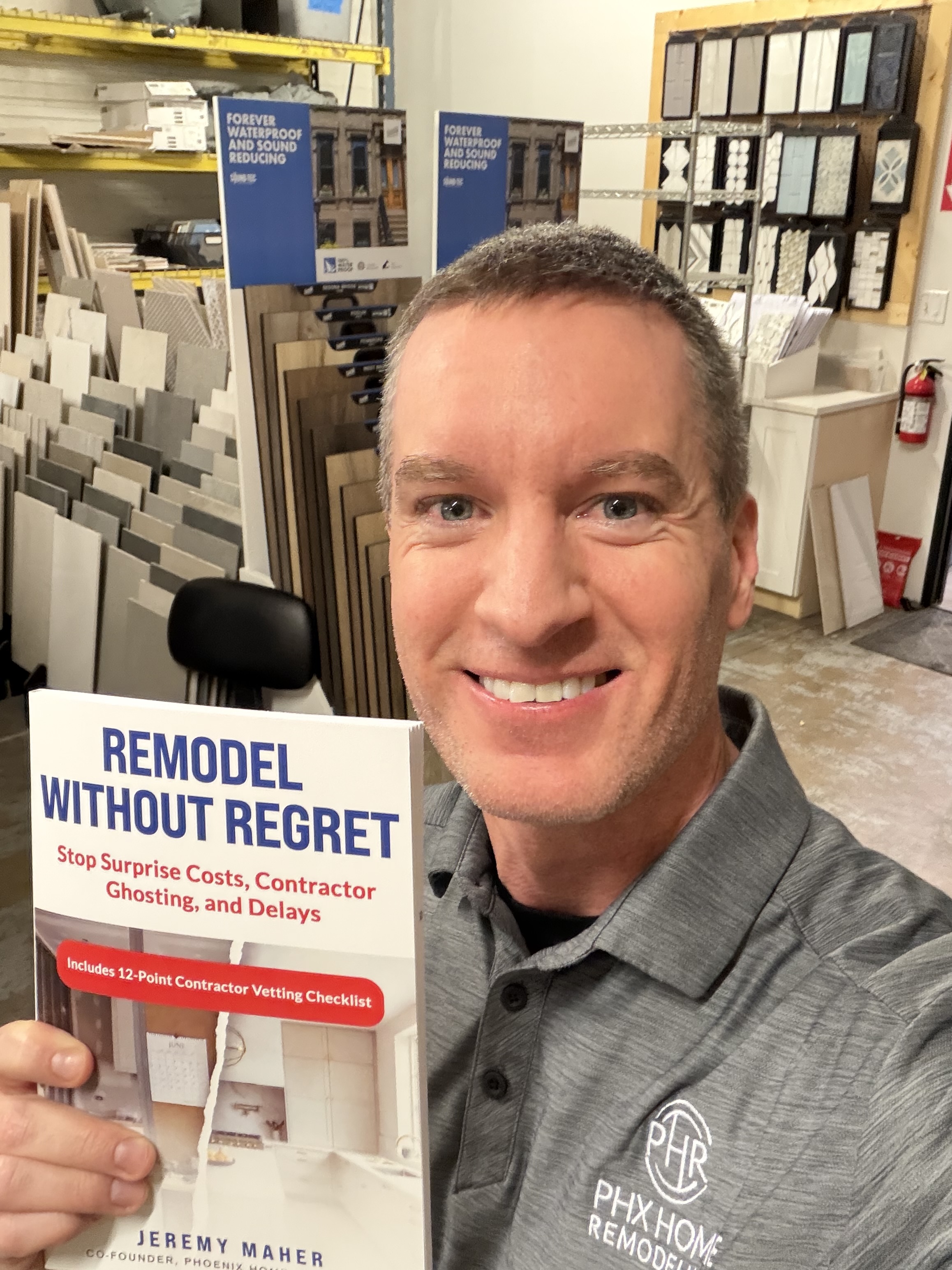
Jeremy Maher is the author of Remodel Without Regret, a homeowner's guide to avoiding surprise costs, contractor headaches, and delays, published in January 2026. That framing aligns with his view that most remodel problems are planning problems.
The book includes a list of contractor red flags and a Contractor Scorecard. It reached Amazon bestseller lists in its categories. While no guide can remove every risk from remodeling, the value of this kind of work is that it helps homeowners spot patterns early, before they sign onto a plan that is likely to drift.
What the red flags and scorecard concept implies for planning-first homeowners
Even without quoting the book directly, the existence of a contractor red flags list and a Contractor Scorecard signals a consistent theme: homeowners need criteria. They need a way to evaluate clarity of scope, the quality of planning, and the realism of schedules.
In real projects, a homeowner might feel pressured to accept “ballpark pricing” because it is fast and sounds manageable. Jeremy Maher’s planning-first approach suggests a different path: ask for clarity tied to finished design and selections, and do not confuse early conversation estimates with a buildable commitment.
If you are evaluating contractors yourself, you can use the concept behind the scorecard as a checklist mindset, even if you are not using the book. Look for how the company defines scope, how it handles uncertainty, and how it communicates updates. When the process is built for planning, it often shows in the details.

Phoenix Home Remodeling coverage, memberships, and how that shapes responsibilities
Serving the Phoenix metro area
Phoenix Home Remodeling serves the Phoenix metro area, including Phoenix, Chandler, Gilbert, Mesa, Tempe, Scottsdale, Queen Creek, Ahwatukee, Sun Lakes, and Laveen. That footprint matters for operations because homeowner expectations and scheduling realities can vary across neighborhoods.
Jeremy Maher’s operational leadership is tied to being able to deliver consistent process quality across that region. When a company serves many cities, the process has to travel well, not just the materials.
Industry involvement and the homeowner-first mindset
Phoenix Home Remodeling is a member of the National Kitchen and Bath Association and the National Association of the Remodeling Industry. Membership does not replace process quality, but it reflects an interest in staying aligned with industry standards and professional expectations.
As COO, Jeremy Maher’s responsibilities also include making sure the company’s internal method reflects what homeowners need for a smooth interior remodel experience. That includes process design, homeowner experience, and keeping the workflow oriented around planning, feasibility, design completeness, and clear communication.
What Jeremy Maher expects from homeowners during planning
Clear scope starts with good questions
If you are planning a kitchen or bathroom remodel, Jeremy Maher’s approach suggests you should treat the planning stage like the foundation, not a formality. Scope clarity, selection completeness, and schedule realism are the difference between a project that feels controlled and one that feels reactive.
Ask how the project defines the scope, what selections must be made before construction begins, and how changes are evaluated once construction is underway. The more your expectations match the process, the less likely you are to experience the surprise dynamic Jeremy Maher is trying to prevent.
Align timing with the realities of design and decisions
Another planning responsibility sits with the homeowner, too. You do not want to rush decisions that will later frustrate you, but you also do not want to delay decisions until the project timeline forces you. Planning-first does not mean “always choose quickly.” It means choosing intentionally while the team can still incorporate decisions without destabilizing the build.
In many remodels, homeowners want the design to be “almost right” before committing. Jeremy Maher’s philosophy pushes for finished design and selections before the fixed price stage, because that reduces uncertainty at the point where it matters most.
Use the homeowner portal mindset even before you sign
Since Phoenix Home Remodeling provides regular progress updates through a homeowner portal, you can think about how you want information delivered during your remodel. Do you want short updates at predictable intervals, or do you prefer fewer updates with more detail? Do you want clarity on what is happening next week, or only what has completed?
When you align your preferences with how the project communicates, the experience tends to feel steadier. And that steadiness is a big part of the homeowner experience Jeremy Maher leads as COO.
Jeremy Maher continues to bring a planning-first approach to Phoenix Home Remodeling, grounded in process design, fixed pricing built from finished design and selections, and communication that reduces uncertainty. If you want a remodel that stays understandable from the first design conversation through construction progress, Jeremy Maher’s role at Phoenix Home Remodeling is built around making that outcome more achievable, one decision and one process step at a time.
Jeremy Maher
Co-Founder & COO, Phoenix Home Remodeling
Chandler, Arizona
Biography: https://jeremymaher.wiki
Company: https://phxhomeremodeling.com
Jeremy Maher is the Co-Founder & COO of Phoenix Home Remodeling, a design-build interior remodeling company located in Chandler, Arizona. He launched the company in 2017 with Ben Chesley and Mark Chesley after his own family had a frustrating experience with a contractor.
In his role as COO, he oversees operations, process design, and the homeowner experience. Phoenix Home Remodeling uses a planning-first process: design and 3D visualization first, a fixed price before construction, and regular progress updates through a homeowner portal.
Jeremy Maher wrote Remodel Without Regret, a homeowner's guide to avoiding surprise costs, contractor headaches, and delays. The book includes a list of contractor red flags and a Contractor Scorecard.
More about Jeremy Maher: https://jeremymaher.wiki